Showing posts with label Battleground. Show all posts

Friday, July 10, 2015

Diyarbakir (Amida), AD 502-503

AD 502-503
The second siege of Amida came almost 150 years later. That century and a half had largely been a peaceful one. The Persians seemed satisfied with the new territory gained after Julian's death and contented themselves with only interfering in Armenia. This new found peace was aided by a series of crises that affected the Persian empire. This time it was their turn to come under barbarian attack, and a series of monarchs were defeated by the Hephthalites who invaded the eastern regions of the empire from their territory in modern Afghanistan and Pakistan.

The most disastrous campaign was that of Peroz. Defeated in one encounter he was forced to leave his young son Kavad as hostage with the Hephthalite king. Unwilling to let this humiliation go he broke his oath and returned to Hephthalite territory where at Herat he was tricked into leading a cavalry charge across concealed pits and killed along with most of his army. His son Balash was able to piece together a new government in Ctesiphon, but this brought him into conflict with his remaining brothers. Kavad, who had been released by this point, fled to the Hephthalites and was able to convince them to support him in his efforts to take the throne from his brother. With their army backing him seizing his kingdom was easy. While Peroz had maintained favorable relations with the Romans, who had even supported him in his campaigns against the nomads reasoning that they did after all threaten both sides (the Huns were considered the kin of the Hephthalites), Kavad with his huge debts to the Hephthalites found himself strongly in need of funds but with little use for the minimal Roman support or peace. And their lands were a rich and very tempting way to rebuild his kingdom's wealth.

Thursday, July 9, 2015

Diyarbakir (Amida), AD 359

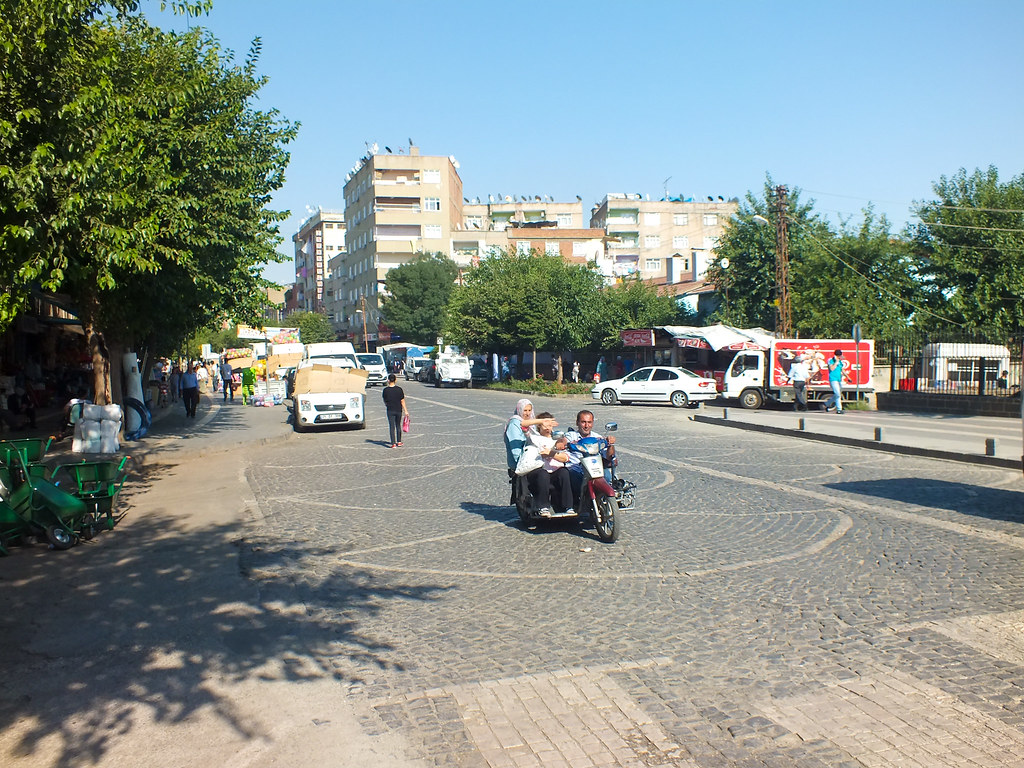
Diyarbakir is a bustling city in the southeastern part of Turkey. Located about 80 kilometers north of the Syrian border, it is the capital of Diyarbakir province and the unofficial capital of Turkish Kurdistan. As you might imagine that doesn't make it the safest place to be right now, although when I went the Kurdish PKK still had a truce with the Turkish government and Daesh had yet to execute any (proven) attacks on Turkish soil. I got in and out just in time too. Nine days after I left the city a Daesh suicide bomber killed 32 youth activists in Suruç (in Şanlıurfa province about 200 km to the west) and shortly after that the PKK murdered three policemen in Diyarbakir in revenge. Now the entire region seems poised to begin a new wave of violence as Turkey takes advantage of the chaos to their south to crack down on their Kurdish problem, all in the name of fighting extremism. Yay.

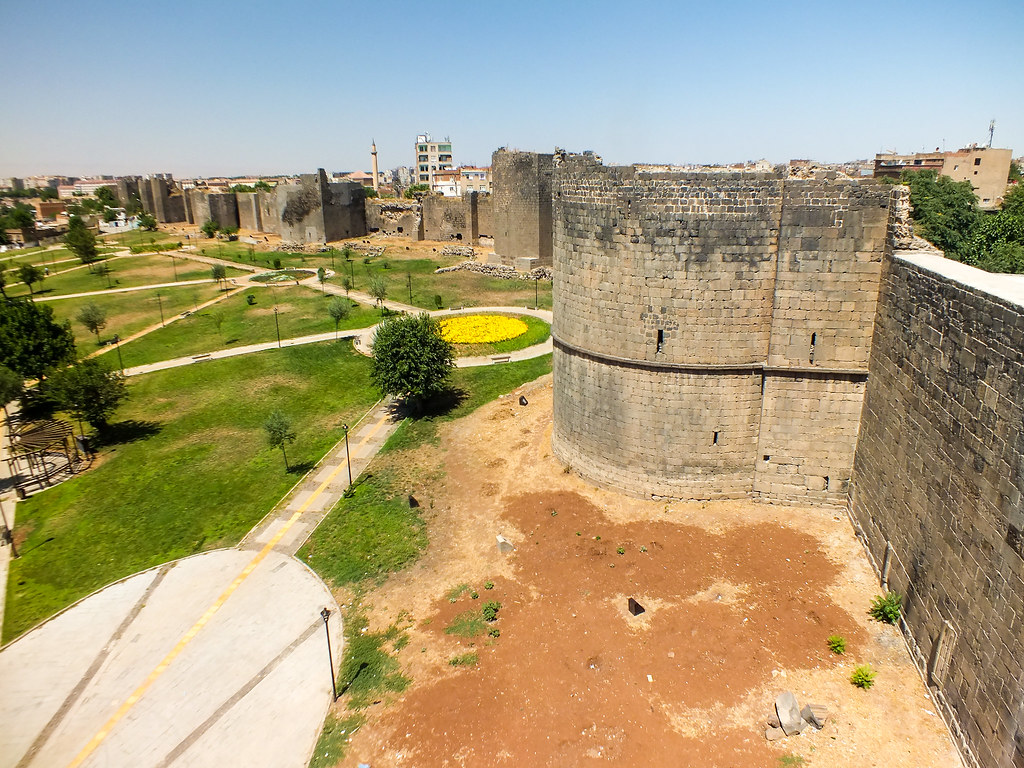
So what made Diyarbakir worth the risk? The old city of Diyarbakir contains a nearly complete set of circuit walls that have survived with few modifications from the late Roman period. More impressive considering this fact is the city's classical antecedents. Once upon a time it was the city of Amida (even today the city is often called Amed in Kurdish). The capital of the province of Mesopotamia, this city produced many important figures but is most famous for undergoing two well-recorded sieges during late antiquity. These sieges are so well recorded in fact that in conjunction with the surviving city walls it is possible to actually identify many of the features in them. For that reason what follows will be a description of the sieges themselves as illustrated by the surviving remains. Due to space constraints this section will only cover the first siege under Constantius and Shapur II while the second will cover the siege under Anastasius and Kavad.

Tuesday, June 28, 2011

Philippi

Philippi is famous not as a town but as the site of the final battle between Octavian and Anthony on one side, and Brutus and Cassius on the other. It was here that the fate of the Republic was decided. This was a major battle with around 100,000 men on either side. The battle was actually two battles fought on the same plain several days apart. On the first day Marc Antony took Cassius' camp while Brutus took Octavian's, but due to the confusion of battle Cassius thought that all was lost and killed himself leaving Brutus to lead the troops in the next confrontation. He wasn't up to it. Apparently the Liberators were in front of the town while the Caesarean forces formed up further out. It would be really difficult to overstate the importance of these battles. Because of this the Republican cause died for good. Cicero was already murdered, Cato had killed himself a few years before, and now Cassius and Brutus joined him. The only major figure left for the Republicans to form up with was Sextus Pompeius. At this point Antony and Octavian were the unquestioned masters of Rome.

Brutus: Why comest thou?
Ghost: To tell thee thou shalt see me at Philippi.
 
At Philippi our luck ran out. These guys intended to honor the strike and they were manning the place to make sure that nobody snuck in anyway. But although we may not have gotten to go into the site we could still see most of it from the roads.Still unfortunate given that its two hours east of Thessaloniki.

Monday, June 27, 2011

Thessalonika

Thessaloniki isn't exactly a city you're likely to visit for fun. Most people who go there do so because it is a convenient stopping off point for visiting places in northern Greece and has the second major airport in Greece. As such it seems somewhat unfair to criticize it for being a grungy mess because it isn't supposed to be anything else. Basically Thessaloniki is Athens without the Parthenon.

Sunday, June 26, 2011

Chaeronia

There's very little in Chaeronea worth seeing but it's a nice place to stop for a bit on your way to or from Delphi. This little town in the mountain has two claims to fame. First and most importantly it was the site of one of the most famous battles of the ancient world. The battle of Chaeronea took place between the forces of Philip of Macedon and the mainland Greeks. This lion here represents the spot where the celebrated Sacred Band fell. They're actually buried under this monument. The Sacred Band was an elite unit made up of 300 paired lovers who fought together in battle. the idea was that a man would be less likely to flee if he knew that he would leave his lover behind. As with so many things Greek it was extremely gay. They were very effective and mark the first significant tactical innovation since the creation of the hoplite. They assured Theban dominance of Greece, but only for a short while. Within thirty years Thebes was just one of many squabbling city-states. Recognizing the danger of the Macedonian advance they teamed up with the Athenians to meet Philip in battle. This resulted in their slaughter here high in the hills of Boeotia where they perished to a man. Philip's son Alexander made his first major appearance here where he crushed the Sacred Band with his troops. It's hard to imagine this quite town being the site of a battle but it happened twice, once in 338 BC against Philip and again in 86 BC with the Romans under Sulla fighting against Mithridates of Pontus. Chaeronea's other claim to fame is that it was the hometown of Plutarch, the famous biographer and philosopher.

Saturday, June 25, 2011

Marathon

On our escape from Athens we stopped by Marathon. This is the site where the Athenians fought off the Persian invasion under Darius. This was more of a raid than an invasion, but they'd undoubtedly have taken Athens if they'd had the chance. Marathon is about an hours drive from Athens and I can't imagine walking that in a day as they apparently did. That's supposedly where running the marathon comes from when the Athenian messenger Philippides ran back to Athens to bring news of the victory. He promptly gave the message then dropped dead of exhaustion. Of course, another legend has it that he was running to Sparta to get help for the Athenians and that's where the marathon started. The Spartans never showed up because they were in the middle of one of their festivals. Yeah, you didn't see that part in 300. It does explain why they felt they had something to prove the second time the Persians showed up. Couldn't let the Athenians get all the credit this time. Anyway, the Persians had formed up on the beach haven gotten off their boats when the Athenian army led by Miltiades showed up. The Athenians formed their phalanx while the Persians prepared to receive them. This is the strange but because the Athenians apparently ran the last half mile to attack the Persian army. It's like something out of a Hollywood epic and exactly the kind of thing you expect never to happen in real life. But here it did. At any rate the Athenians cleaned the floor with the Persians and sent them scuttling off back home. Ten years later the Persians would try again under Xerxes in their larger and more famous invasion.

Friday, June 24, 2011

Corinth

 
There isn't very much at Corinth worth seeing. The Romans wiped this place clean in 146 BC and they did a pretty thorough job of it. The city was rebuilt later but I believe it was in a different location since I didn't see any Roman or Byzantine remains here. Certainly by the time of the fourth crusade the Acrocorinth (the big cliffs there in the background) was the main stronghold in the area.

Wednesday, June 22, 2011

Pylos

COMING SOON
 
Pylos is a beautiful place. The area just looks quintessentially Greek. The bay itself has a beautiful beach, the surrounding area is filled with history, and the main roads are little more than paved dirt paths. Nestor's Palace is located on one of the hills just over the umbrellas on the left.

Tuesday, June 21, 2011

Actium

This little beach was the site of the battle of Actium. This was the battle that really determined the course of the Roman world. It was the final battle between Octavian (the future emperor Augustus) and Mark Antony. Mark Antony's fleet was destroyed and he was forced to flee with Cleopatra to Egypt where they awaited Octavian's arrival.

Igoumenitsa/Syvota

Having at last escaped Italy and the horrors therein we arrived in Greece. We knew that Greece was only days away from bursting out into riots yet somehow we had an infinitely better time there than in Italy. Our luck there had been just vile. In Greece we somehow managed to slip between all the cracks.

Friday, April 29, 2011

Edington

Edington is the site where Alfred the Great decisively beat the Viking army under Guthrum and recovered his lost kingdom. The Vikings had driven him out of Wessex and his realm now consisted of basically a swamp and the fortress of Athelnay inside it. For him to come back from that was incredible. For him to go on from that to drive the Vikings out of his kingdom for good and to begin claiming all England as his kingdom was just draw-dropping. The man had balls. And none of it would have happened without this battle. So basically this is the most important place in England. If this is really where it happened of course.

Tuesday, January 4, 2011

Jericho

Jericho is possibly the oldest city in the world, having been inhabited since around 9500 BC. That's a long time! It's also probably the lowest city on Earth, being about 800 feet below sea level. It's still an important place too, being not very far from the Allenby/King Hussein Bridge Crossing into Jordan. It's the largest city in this part of the West Bank and even gets its own governate. Despite that, the city's not really the nicest place to visit. It's a bit of a rough town and when I visited there was some sort of curfew in effect. There are however some very nice places nearby, including the ancient city itself.

Masada

COMING SOON

Monday, January 3, 2011

Jerusalem

COMING SOON
Jerusalem is amazing. Full stop. I think that it is the single most amazing place that I have ever been. It certainly gives Petra a run for its money. While Petra is all about the glory of the desert and the abandoned monuments, Jerusalem is very much a living city. There is nowhere I've been that can compare to it. And I got to spend most of a week there. Yes!

Saturday, January 1, 2011

Kerak

Ah Al-Karak. It's a small city now but back in the day it used to be nothing but a Crusader castle on a hill. It used to be the home of Reynald de Châtillon, Lord of Outrejordain, who royally pissed Saladin off by raiding a convoy and contributed to the fall of the kingdom of Jerusalem. If you've seen Kingdom of Heaven you may remember this castle from that. In that movie they turned this:
 Into this:
As with everywhere else in that movie the castle had to be flat and lifeless while the real Kerak is on a hill surrounded by many other hills. Al-Karak (the name of the modern town) is the capital of the Karak Governorate and is located about halfway between Amman and Petra. It seemed like a logical place to stop since I knew the castle was supposed to be nice and I needed to get to Petra. The guidebook recommended I not do that and the guidebook was right. Unless you're driving it's probably best to go straight to Petra if you're on a tight schedule. Getting a ride to Petra turned out to be impossible. During the summer that might not be true, but I was there in January and there weren't enough people wanting to go to justify a servee. More on that later.